More projects moving forward.
A lean team can progress more tenders across the project pipeline without giving up control or decision quality.
 Ignis
Commercial AI adoption · Tender
People create the value: shaping the market, challenging assumptions and working with suppliers. AI agents carry coordination and production so more projects move towards a confident close.

The shift
Today, people carry the packs, comparisons and decision history of every tender. Valuable time disappears into chasing inputs, rebuilding analysis and holding the process together.
With agentic AI, the system carries that baseline work, with evidence, controls and human decisions built in. People get back to supplier relationships, challenge and commercial judgement that help them buy well.
A lean team can progress more tenders across the project pipeline without giving up control or decision quality.
The team has more time to engage suppliers, strengthen participation and keep credible alternatives alive.
Commercial and technical leaders can challenge assumptions, explore innovation and work with suppliers on more cost-effective solutions.
Requirements, clarifications, evaluation reasoning and negotiated commitments remain connected through diligence, financial close and mobilisation.
The tender lifecycle
Each stage has two sides: the commercial value only people can create, and the baseline work a governed agentic system can carry. The thread continues through diligence, financial close and mobilisation.
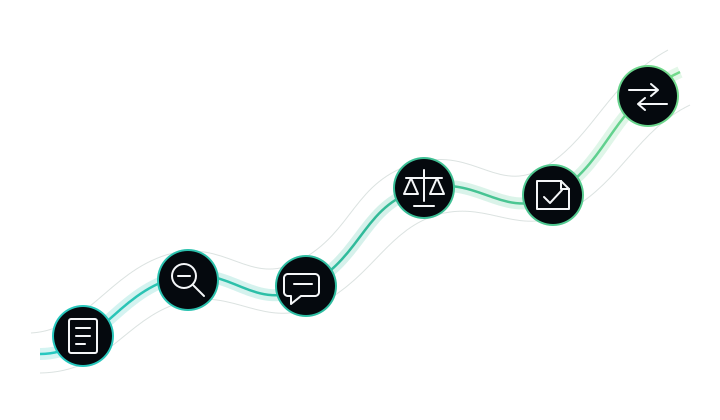
The team has time to shape the market, bring the right suppliers in and build a package that creates meaningful competition, rather than simply getting the documents issued.
Where agentic AI helps
Specialists investigate the exceptions, qualifications and risks that could change the deal. Their time goes into material judgement, not re-keying supplier returns.
Where agentic AI helps
The team can have better supplier conversations: testing assumptions, protecting competition and resolving the issues that affect value, risk and deliverability.
Where agentic AI helps
Decision makers spend their time debating risk, value, innovation and commercial trade-offs. They challenge the recommendation and retain authority over the outcome.
Where agentic AI helps
Commercial leaders focus on the negotiation, residual risk and the route to contract and financial close without losing the decisions that shaped the preferred offer.
Where agentic AI helps
Delivery inherits the deal, not a folder. The receiving team understands the relationships, commitments and reasoning behind what was agreed.
Where agentic AI helps
What compounds
Supplier intelligence, evaluation reasoning and negotiated commitments remain available from preparation through mobilisation.
The foundation
If the requirements keep moving, the evidence is fragmented and decision rights are unclear, agents will reproduce that inconsistency faster. We make the commercial system explicit before asking AI to carry more of the work.
Stages, ownership, handoffs and the route from package strategy to mobilisation.
Requirements, returns, clarifications, evidence, commitments and decision history.
Human authority for market communications, evaluation, negotiation and award.
Supplier relationships, judgement, risk, negotiation and final decisions stay human.
Bounded work on extraction, reconciliation, coordination, comparison and continuity.
How Ignis helps
I bring 17 years across energy, infrastructure, EPC and complex international transactions, working on both sides of bids and tenders. Tendering is not a document exercise. It is a chain of commercial decisions that must survive scrutiny and then survive the move into delivery. The route is the same as the wider Ignis approach: map the work, design the model and support delivery.
See how packages, information and decisions move today.
Define the right division of work between people and agents.
Support the workflow, evidence trail and human gates through build and test.
Put ownership, documentation and controls with the team.
Help people use, challenge and improve the system.
We map where capacity or control breaks, design a bounded capability around the real work and support delivery with the team. The next move is guided by evidence, not a fixed rollout plan.
Where this fits
Explore the broader commercial workflow, then use the tender desk where the pressure and opportunity are most immediate.
See servicesStart here
Bring one live or recent package. We will find where capacity, control or commercial continuity breaks, then decide whether one governed capability is worth proving.
Start the conversationLet’s map where your commercial flow slows down, and what Ignis would change.
Get in touch
Weekly intelligence on the commercial decisions that get energy projects built.